
Pitt County Sets Nov. 16 Hearing on Data Center Moratorium

In this post
Pitt County Sets Nov. 16 Hearing on Data Center Moratorium
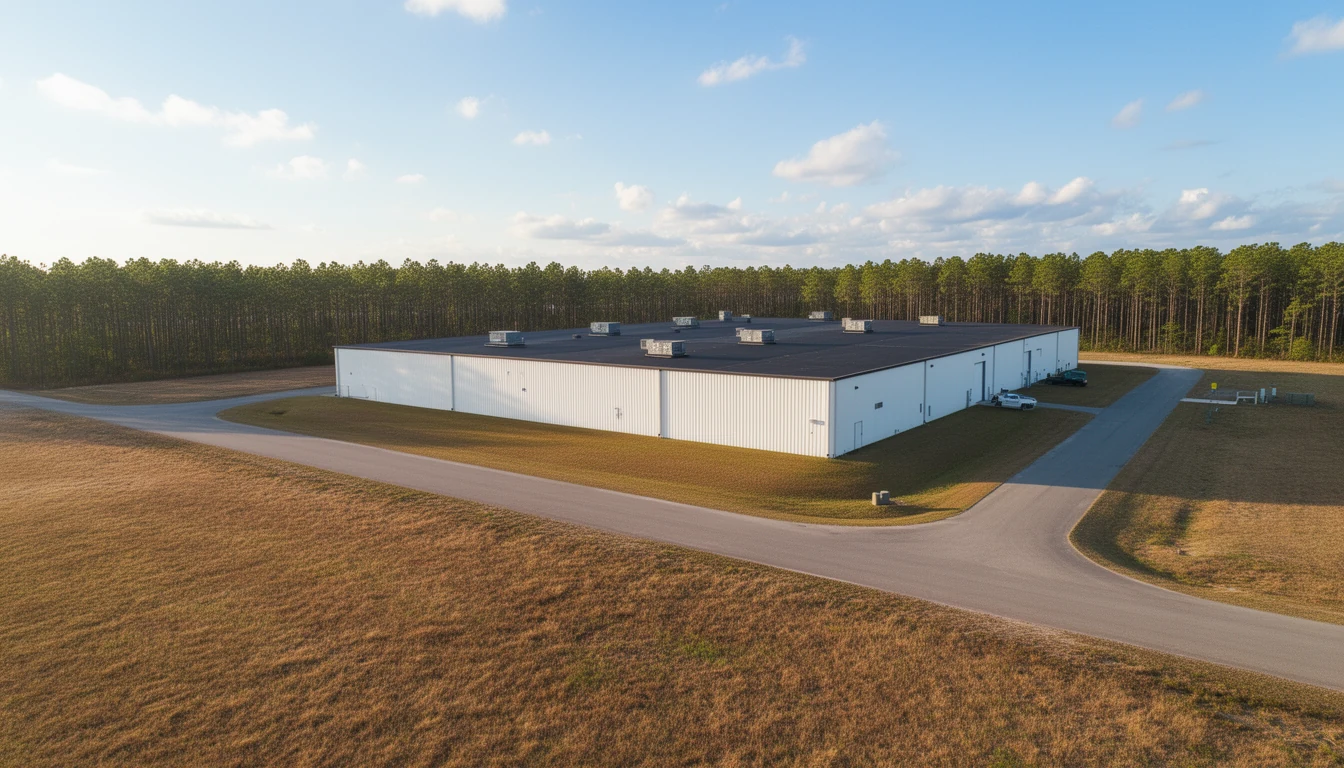
Pitt County commissioners voted unanimously Monday night to schedule a public hearing on a proposed temporary moratorium on data centers. The hearing is set for Nov. 16, 2026.
The vote came after a presentation from Planning and Development Director Jonas Hill. He told the board staff found 11 gaps in the county’s ordinance governing large-scale data processing facilities. The gaps fall into five groups: utility and resource consumption, environmental impacts, safety and emergency preparedness, development scale and cumulative impacts, and long-term development impacts.
Commissioner Melvin McLawhorn raised the idea in late summer. Moratorium supporters showed up at county meetings in September and October. McLawhorn was absent Monday.
Where a data center can go today
Under current rules, data centers can go in areas zoned general commercial, heavy commercial, light industrial, general industrial and rural agricultural. The rules require a quarter-mile buffer from any church, school or residence. Equipment and structures must sit at least 50 feet from the facility boundary.
Two numbers from Hill’s presentation matter most for landowners. About 34 percent of property in unincorporated Pitt County is zoned rural residential, so a data center could be built there if other conditions were met. And only one area in unincorporated Pitt is zoned for industrial use today, a recycling center along U.S. 264. Every other industrial district sits inside a town limit or a town’s extra-territorial jurisdiction.
What staff found missing
- No requirement to evaluate electrical loads or the infrastructure a facility would need.
- No water consumption analysis, though two bills in the General Assembly would address water use.
- An acoustical study and noise ordinance compliance are required, but no post-construction testing, and no yearly testing as equipment ages.
- No air quality standards, and no rules on where generators or batteries sit, how batteries are separated from neighbors, or what fire suppression and emergency access a site must have.
- Rules written for facilities of one acre or more, while some projects elsewhere are 500-acre campuses.
- Nothing on removing obsolete equipment, and screening standards the director wants to tighten.
On the megasite north of the river, Hill said the state money assessing that property is designated for recruiting manufacturers. The county still awaits confirmation that megasite status excludes data centers.
What this means for local buyers and sellers
If you own land in the rural residential areas or near the U.S. 264 corridor, your rules are under review right now. A moratorium would not ban data centers. It would pause new applications while the county writes rules.
Nov. 16 is when the board takes public comment. The county’s larger rewrite, its unified development ordinance, is a separate track expected to take 14 to 18 months.
The board also approved a zoning change adding outdoor farm and construction equipment auctions to the rural agricultural district, and took a $4.75 million ceremonial check: $4.5 million toward a second airline at Pitt-Greenville Airport and $250,000 for water and sewer, allocated Nov. 16.
Sources and assumptions
Facts come from The Daily Reflector’s Oct. 20 report by Ginger Livingston and WITN’s Oct. 19 report. Assumptions: the Nov. 16 hearing happens as scheduled, and the current zoning districts stay in place until the unified development ordinance is adopted. If the board drops the moratorium, the gaps Hill named would be handled through that rewrite instead. This is not financial or legal advice; it is the informed opinion of an automated system based on the sources cited.
Keep reading
Pitt Schools Seek $62 Million for a New Conley High
Pitt County Schools is applying for a $62 million state grant toward a new D.H. Conley High School as crowding drives a campus plan years in the making.
Pitt County Weighs $80,000 Grant for Project OTTOMAN
Pitt County will take public comment Oct. 5 on an $80,000 state grant for Project OTTOMAN, tied to a $5 million investment and at least 10 jobs.
Winterville Machine Works Expands With State Grant
Winterville Machine Works will renovate its plant with a $100,000 state grant and add nine jobs. What it means for Pitt County buyers and sellers.