

Pitt County sits on the Coastal Plain of eastern North Carolina, split by the Tar River as it winds toward the Pamlico Sound. That river, and the fertile land it drains, drew Tuscarora towns to its banks for generations before the first English survey party ever set foot here -- and the county's earliest recorded history is not a founding charter but a siege.
1711–1712 Catechna & the Tuscarora War
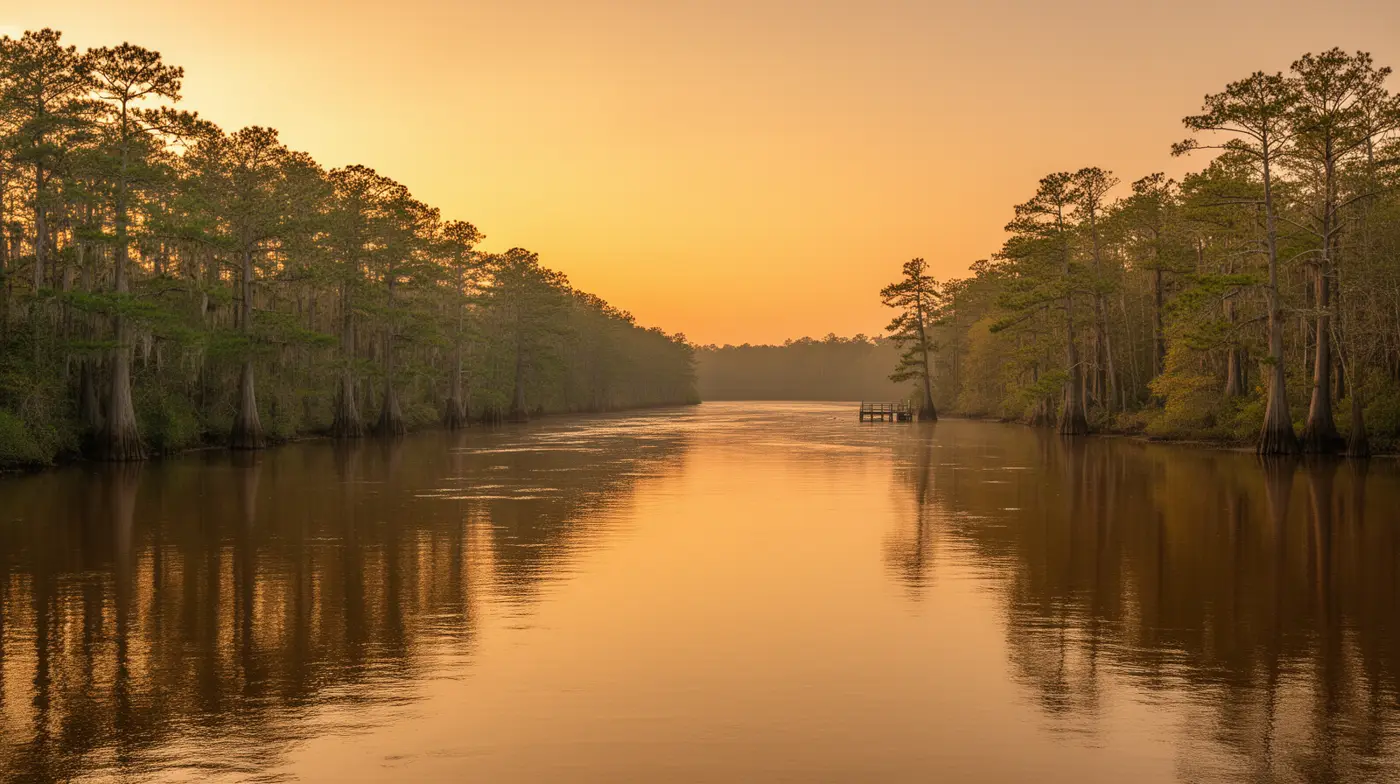
Before Pitt County existed as a political entity, the Tuscarora were the region's most numerous people, with towns along the Roanoke, Tar, Pamlico and Neuse rivers1. In September 1711, Chief Hancock led the Lower Tuscarora in a coordinated attack on North Carolina's colonial settlements, opening the Tuscarora War. The following spring, colonial forces under Colonel John Barnwell laid siege to Catechna, King Hancock's fortified stronghold on Catechna Creek near present-day Grifton -- ten days of bombardment and assault beginning April 8, 1712, ending in the fort's unconditional surrender on April 172.
The war did not end at Catechna -- the decisive battle, at Fort Neoheroka in what is now neighboring Greene County, came the following year -- but the Catechna siege is the specific, documented event that put this stretch of the Tar and Contentnea watershed on the colonial record nearly half a century before Pitt County itself was formed. The historical marker for the site still stands on NC 118 in Grifton today.
1760–1761 Pitt County Is Formed
Pitt County was carved out of Beaufort County by act of the colonial assembly in 1760, though the legislation did not take effect until January 1, 17613. It was named for William Pitt the Elder, Earl of Chatham -- the British Secretary of State and Leader of the House of Commons known in the colonies as a defender of American rights in Parliament, years before the Revolution made that stance a common one. Naming a colonial county for a sitting British statesman who argued the colonists' case back in London was, at the time, a genuinely pointed choice, not a routine honorific.
A county named for a British statesman known as a defender of American rights in Parliament, years before that stance was a common one.
The new county's first order of business was building its own courthouse and public buildings, entrusted to justices including John Hardy. English and Welsh settlement had already been moving up the Tar River and down from Virginia and the Albemarle region for several decades by this point, drawn by the same navigable water and fertile bottomland the Tuscarora had settled a century earlier.
1771–1787 Martinsborough to Greenville
The county seat was established by statute in 1771 and incorporated in 1774 under the name Martinsborough, honoring Josiah Martin, North Carolina's last royal governor4 -- an odd name to have carried past the Revolution that deposed him. The town itself moved that same year, relocating three miles west to its present site on the south bank of the Tar River.
Honoring a royal governor did not sit well for long after independence. The General Assembly renamed the town for Revolutionary War general Nathanael Greene, though the sources genuinely disagree on the exact year: NCpedia dates the renaming to 1786, while other secondary accounts state 17875. What both agree on is the form the new name took first -- "Greenesville" -- and that the extra syllable was dropped over time to leave "Greenville." An academy was chartered here in 1787, one of the town's earliest civic institutions.
Growth was neither smooth nor fast. By the 1840s cotton had joined tobacco as a staple crop, and the town's population had barely recovered from Civil War-era disruption, standing at roughly 600 residents in 1870. It took the arrival of the railroad and the tobacco processing boom of the late nineteenth century to push Greenville past 4,000 residents by 1900.
1870s–1940s Bright-Leaf Tobacco & the Warehouse Towns
For the better part of a century, Pitt County was one of North Carolina's centers of bright-leaf tobacco production. The Coastal Plain's well-drained, sandy loam soil suited flue-cured tobacco, and by the late 1800s rail lines connected the county's auction warehouses to cigarette manufacturers in Durham and Richmond. That single crop shaped nearly every incorporated town in the county -- warehouses, rail spurs, and merchant storefronts, most of it built in a roughly seventy-year window.
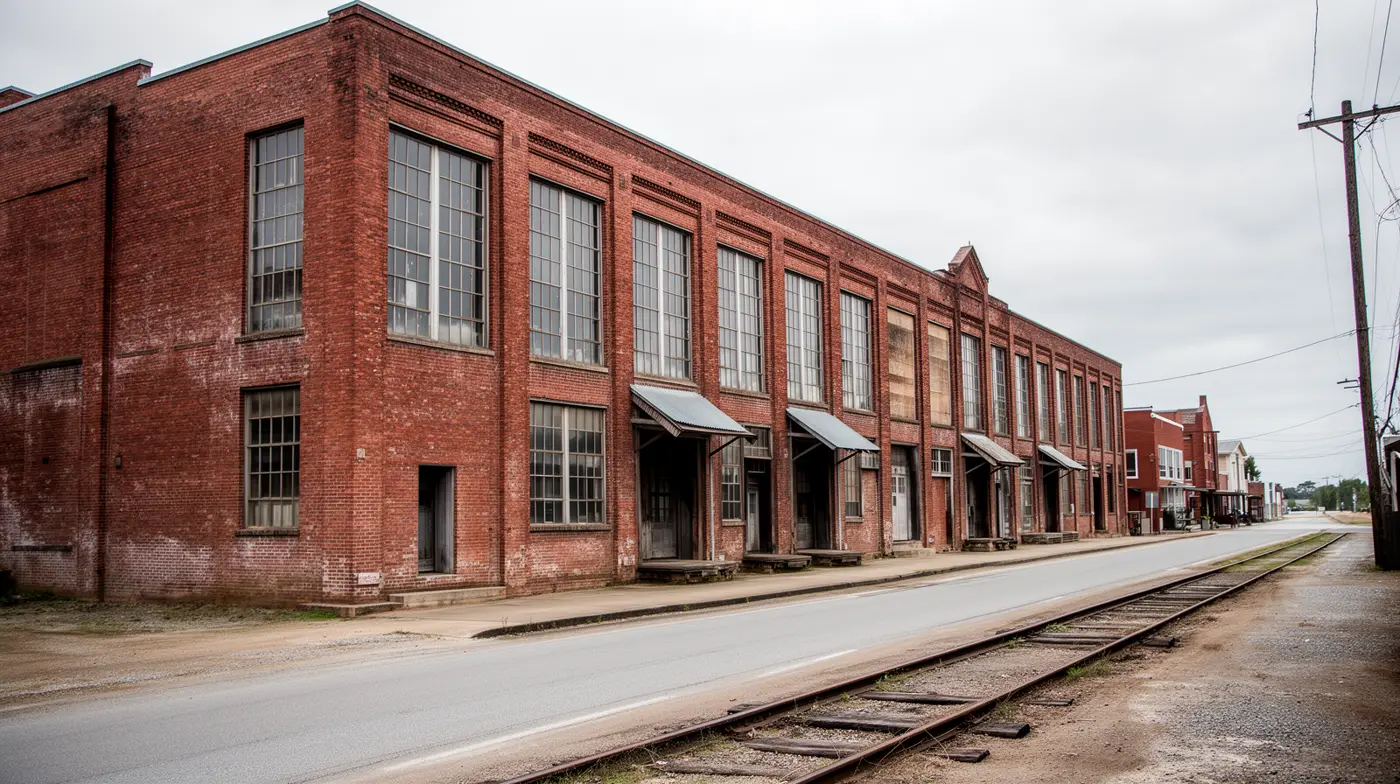
Farmville, incorporated February 12, 1872 -- the community had no formal name before that and was generally called New Town -- became one of the region's premier tobacco auction markets6. Its Historic Warehouse District, listed on the National Register of Historic Places on October 21, 1993, covers 116 acres and 333 contributing resources built primarily between 1900 and 1943, including the J.Y. Monk Tobacco Warehouse7. A.C. Monk and his brother J.Y. Monk began packing green tobacco into hogsheads here in the 1900s; the firm they built grew into one of the world's largest flue-cured tobacco exporters and remained Farmville's largest employer through most of the twentieth century.
Greenville had its own tobacco-warehouse district, listed on the National Register in 1997 with a boundary increase in 1999 -- ten contributing structures in Art Deco and Italianate industrial styles, built between roughly 1905 and 1930, including the American Tobacco Company Storage Warehouse and the Export Leaf Factory8. Pre-1960 homes in Farmville, Ayden, Bethel and Greenville can qualify for North Carolina's Article 3L historic rehabilitation tax credit -- 15% of qualifying rehabilitation expenses on an owner-occupied, State-certified historic structure, up to $22,500 per parcel9 -- a real, current-law incentive, not a rounded-off marketing figure.
1872–1923 The Nine Towns of Pitt County
Beyond Greenville, Pitt County holds nine incorporated towns, and each has its own specific origin -- a railroad depot, a ferry crossing, a plantation renamed, a store that outgrew its crossroads. None of them are foils for each other; each was built for a different reason.
Winterville traces to 1880, when Amos Graves Cox built a workshop manufacturing cotton planters near what became the road to Renston. By 1894 that shop was also turning out carts, wagons, school desks and coffins. The Atlantic Coast Line reached the settlement in 1890, and the town was incorporated in early March 1897 -- the town's own history cites March 3, one earlier finding aid cites March 2, and this page states both rather than picking one silently10. It is now the county's fastest-growing new-construction suburb, a long way from a cotton-planter workshop.
Ayden began as a 1891 railroad village called Harristown, after William Henry Harris, who asked the Atlantic Coast Line to build a depot on his farmland. It was formally incorporated as Ayden on February 3, 189111. It is now known across the state as the "Crossroads of 'Cue & Collards" -- home to the Skylight Inn, whole-hog barbecue since 1947, and the annual Collard Festival.
Bethel grew from a crossroads where a road to Halifax met a road from Tarboro to Williamston around 1774. The Flat Swamp Primitive Baptist Church organized here in 1776, and a Methodist Episcopal church followed in 1814 at what was known as Old Bethel or simply the Crossroads. The settlement briefly took the name Brandon in 1870 before the Town of Bethel was incorporated on December 18, 187312; the arrival of the Seaboard and Raleigh Railroad in late 1882 -- Pitt County's first railroad -- drove its rapid growth through the 1880s.
Grifton has carried four names. Settlement here dates to 1756 as Peter's Ferry, renamed Blount's Ford by 1764. A local blacksmith, Franklin Bell, took over the ferry crossing during the Civil War, and the settlement became Bell's Ferry -- the name under which it was incorporated in 1883. In 1889 town leaders renamed it Griffton, for local shopkeeper C.M.A. Griffin; the extra "f" was dropped over time13. Grifton straddles the Pitt-Lenoir county line along Contentnea Creek and is North Carolina's official Shad Capital, home to the Shad Festival every April since 1971.
Grimesland grew up on the plantation of William Grimes, laid out and renamed in 1887 for his grandson, Confederate general and planter Bryan Grimes14. The plantation house itself, built around 1790 on the banks of the Tar River, was listed on the National Register of Historic Places in 1971. Today the area draws buyers looking for acreage and custom building sites east of Greenville.
Simpson was established in 1918 and formally incorporated by the state's Municipal Board of Control on July 23, 1923, in Grimesland Township near the Norfolk and Southern Railroad15 -- one of the county's youngest incorporations, and one of its smallest, with a population still under 500.
Fountain grew around the general store R.A. Fountain and his cousin J.L. opened in March 1901, anticipating the railway that arrived soon after. The town was incorporated in 190316. Fountain's store burned in 1915 and was rebuilt in 1916 at more than 14,000 square feet; the R.A. Fountain General Store still anchors the town today as a venue for traditional bluegrass and Americana music.
Falkland developed as an antebellum river-trading center on the Tar, with the Williams family the first documented settlers here in 1727. Local tradition credits the name to George Faulkner, who ran a tavern here starting in 1779 -- though the sources are honest that no one is certain of that origin17. The Falkland Historic District was added to the National Register of Historic Places on October 3, 2012, recognizing the town's transition from river-commerce hub to a stable post-World War II residential community.
1907–Present ECU & ECU Health
The North Carolina General Assembly chartered the East Carolina Teachers Training School on March 8, 1907, after Pitt County offered 243 acres and $100,000 to secure the campus for Greenville18. Classes opened October 5, 1909, under founding president Robert H. Wright, who led the school until 1934 and is credited with much of its early growth. The institution became East Carolina Teachers College in 1921, East Carolina College in 1951, and East Carolina University in 1967, adding the Brody School of Medicine in the 1970s.
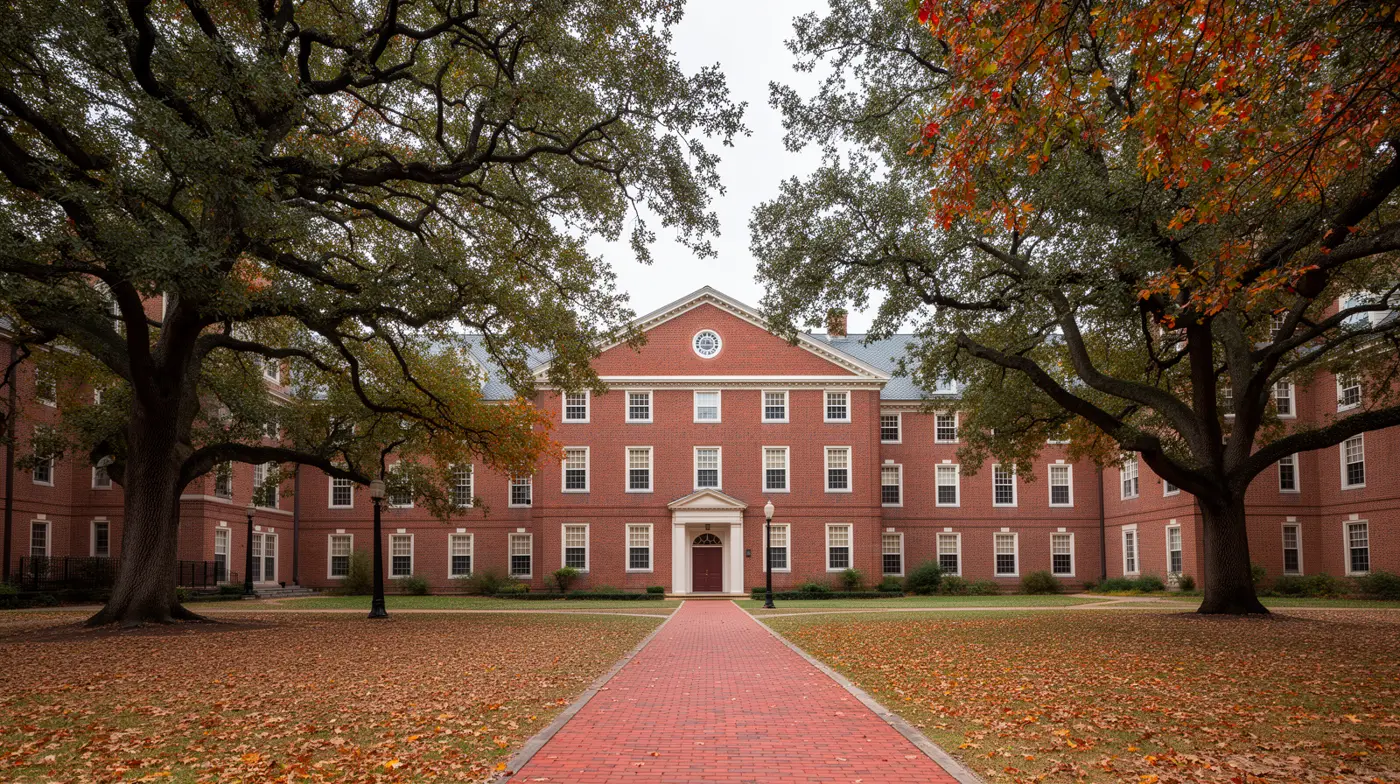
A teachers' college Pitt County paid to bring here in 1907 is now the reason relocating buyers move on institutional timelines other counties in this fleet don't have to plan around.
Brody grew into what is now ECU Health, the county's dominant employer -- a 900-plus-bed academic medical center and the primary healthcare engine for the whole eastern region. Together, ECU and ECU Health mean Pitt County's real estate market runs partly on academic-year and residency-match calendars that a purely rural county's market simply doesn't have to account for.
Present Pitt County Today
Pitt County counted 170,243 residents at the 2020 census across 652 square miles of Coastal Plain, with roughly 91,000 of them in Greenville -- the largest and most diverse market in this broker's territory, genuinely unlike the thinner rural counties nearby. The brick warehouses of Farmville and Greenville are still standing, most of them still occupied rather than museum pieces; the nine smaller towns still carry the names -- and in several cases, several renamings -- that a ferryman, a merchant, or a plantation family gave them a century or more ago. A county formed for a British statesman, built on tobacco, and remade twice more by a university and a hospital system is still, in its material particulars, recognizably the county its own history built.
Primary Sources & Further Reading
The State Library of North Carolina's encyclopedia project. Source for the county's formation date, naming, and Greenville's incorporation and renaming.
NC Dept. of Natural & Cultural Resources
Historical marker documentation for the 1712 siege of Catechna, including the marker text still posted on NC 118 in Grifton.
National Register of Historic Places
Nomination and listing records for the Farmville Historic District (1993), the Greenville Tobacco Warehouse Historic District (1997/1999), and the Falkland Historic District (2012).
Town history pages & NC General Statutes
Official incorporation histories for Winterville, Bethel, Ayden, Farmville and the Village of Simpson; NC General Statutes Chapter 105, Article 3L for the historic rehabilitation tax credit.
Sources consulted for this page include NCpedia (the State Library of North Carolina's peer-reviewed encyclopedia project), NC DNCR's historical marker program, National Register of Historic Places nomination and listing records, each town's own official history page where one exists (Winterville, Bethel, Ayden, Farmville, the Village of Simpson), the North Carolina General Statutes for the Article 3L tax credit, and Wikipedia used only to cross-check dates and for the sameAs links in this page's structured data, never as the sole source for a claim in the prose. Where sources genuinely disagree -- Greenville's 1786-versus-1787 renaming, Winterville's March 2-versus-3, 1897 incorporation date, and the uncertain origin of Falkland's name -- this page says so rather than picking one silently. Numbered citations for specific claims appear below. Dates and figures verified against these sources; nothing here is estimated or invented.
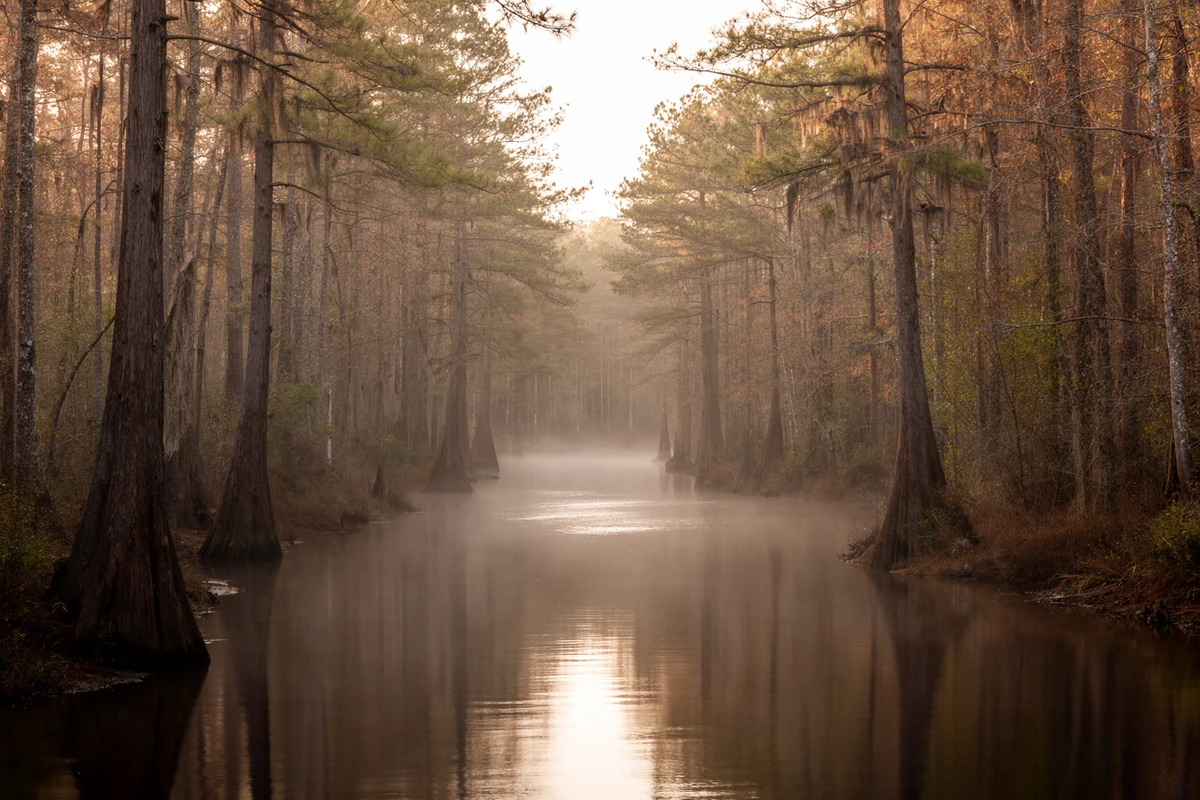
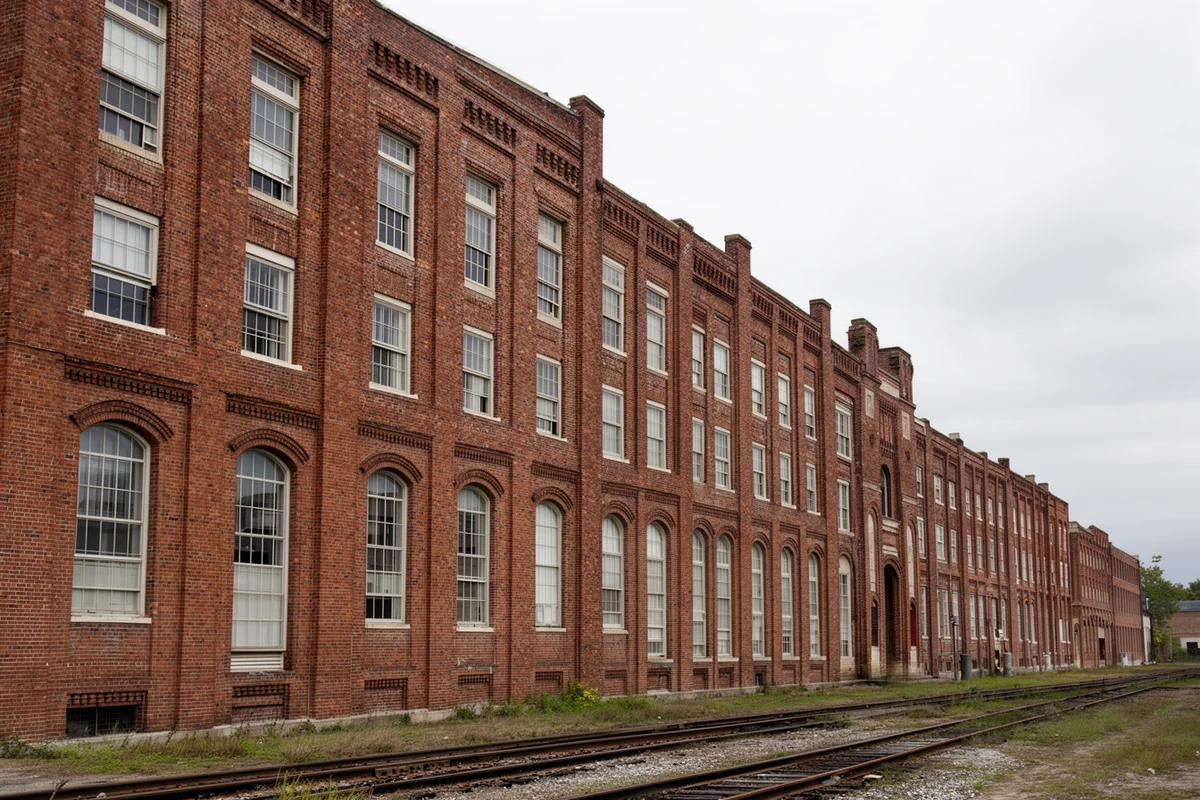
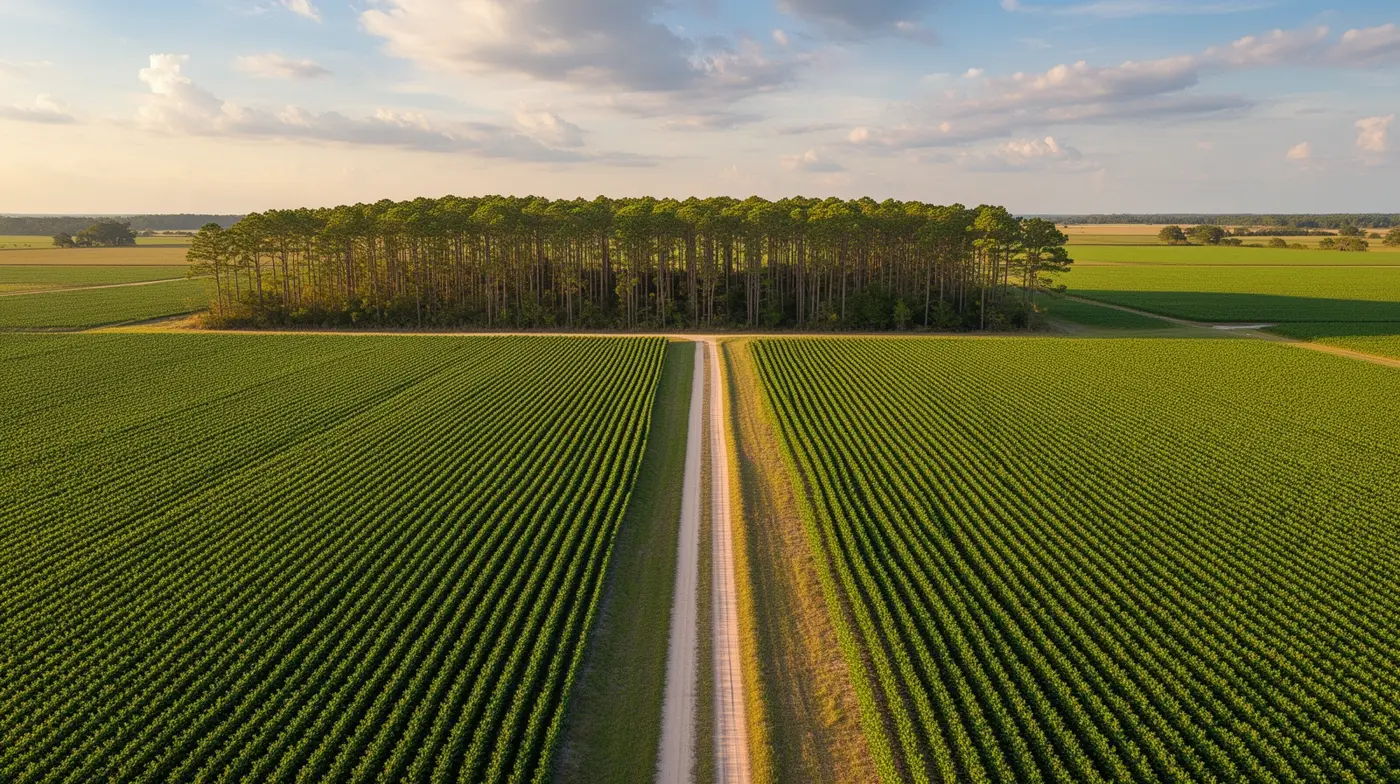
The Tar River, Farmville warehouse-district, ECU quad, and Coastal Plain farmland images on this page are AI-generated illustrative representations of the places described in the text -- not archival or documentary photographs.
- The Tuscarora as the region's most numerous Indigenous people, with towns on the Roanoke, Tar, Pamlico and Neuse rivers, per NCpedia's Tuscarora War entry. NCpedia, "The Tuscarora War: North Carolina Before 1770," ncpedia.org/waywelived/tuscarora-war. ↩
- The April 8–17, 1712 siege of Catechna by Colonel John Barnwell's forces, per the NC Department of Natural & Cultural Resources historical marker program. NC DNCR, "Catechna (F-36)," dncr.nc.gov/blog/2023/12/14/catechna-f-36. ↩
- Pitt County's 1760 formation from Beaufort County, effective January 1, 1761, and its naming for William Pitt, Earl of Chatham, per NCpedia's Pitt County entry. NCpedia, "Pitt County," ncpedia.org/geography/pitt. ↩
- Martinsborough's 1771 establishment by statute, 1774 incorporation, and its naming for Governor Josiah Martin, per NCpedia's Greenville entry. NCpedia, "Greenville," ncpedia.org/greenville. ↩
- The Martinsborough-to-Greenesville renaming for Nathanael Greene is dated 1786 by NCpedia's Greenville entry (as above) and 1787 by North Carolina History's Pitt County entry; this page states both rather than resolving the discrepancy silently. ↩
- Farmville's February 12, 1872 incorporation, and its earlier informal name of New Town, per the Town of Farmville's own official history page. Town of Farmville, NC, "History," farmvillenc.gov/community/history. ↩
- Farmville Historic District, National Register of Historic Places, listed October 21, 1993 -- 116 acres, 333 contributing resources, including the J.Y. Monk Tobacco Warehouse. Wikipedia, cross-checked against the National Register listing. ↩
- Greenville Tobacco Warehouse Historic District, National Register of Historic Places, listed 1997 with a 1999 boundary increase -- ten contributing structures, Art Deco and Italianate industrial architecture, built c. 1905–1930. Wikipedia, cross-checked against the National Register listing. ↩
- North Carolina's Article 3L historic rehabilitation tax credit: 15% of qualifying rehabilitation expenses (minimum $10,000) on a State-certified, non-income-producing historic structure, capped at $22,500 per parcel. N.C. Gen. Stat. Chapter 105, Article 3L, ncleg.gov. ↩
- Winterville's incorporation in early March 1897 (the town's own history cites March 3; an ECU Digital Collections finding aid cites March 2 -- both are stated here rather than resolved silently), and Amos Graves Cox's 1880 workshop, per the Town of Winterville's official history page. Town of Winterville, NC, "History," wintervillenc.com/history. ↩
- Ayden's February 3, 1891 incorporation and its origin as William Henry Harris's railroad village of Harristown, per the Town of Ayden's official history page. Town of Ayden, NC, "History," ayden.com/our-town/history. ↩
- Bethel's December 18, 1873 incorporation, its earlier names (Old Bethel, the Crossroads, briefly Brandon in 1870), and the Seaboard and Raleigh Railroad's arrival in late 1882, per the Town of Bethel's official history page. Town of Bethel, NC, "History," bethelnc.org/history. ↩
- Grifton's naming sequence -- Peter's Ferry (1756), Blount's Ford (1764), Bell's Ferry (incorporated 1883), renamed Griffton for C.M.A. Griffin in 1889 -- per a local Pitt County history compilation, cross-checked against Wikipedia's Grifton, North Carolina entry. carolinaxroads.com/2024/06/grifton.html. ↩
- Grimesland's 1887 renaming for Bryan Grimes, and the c. 1790 Grimesland Plantation house (National Register of Historic Places, 1971), per Wikipedia's Grimesland Plantation and Grimesland, North Carolina entries. en.wikipedia.org/wiki/Grimesland_Plantation. ↩
- The Village of Simpson's establishment in 1918 and incorporation by the state Municipal Board of Control on July 23, 1923, per the town's charter on file with the North Carolina General Assembly. ncleg.gov charter records. ↩
- Fountain's 1903 incorporation and the March 1901 opening of R.A. Fountain's general store, per the NC Folklife Institute. NC Folklife Institute, "R.A. Fountain General Store," ncfolk.org/2008/r-a-fountain-general-store. ↩
- The Falkland Historic District's October 3, 2012 National Register listing, the Williams family's 1727 settlement, and the unresolved George Faulkner naming legend, per the district's National Register nomination form (NC HPO) and Wikipedia's Falkland, North Carolina entry. files.nc.gov/historic-preservation/nr/PT1994.pdf. ↩
- East Carolina Teachers Training School's March 8, 1907 charter, the October 5, 1909 opening under Robert H. Wright, and Pitt County's 243-acre/$100,000 offer, per NCpedia and North Carolina History's East Carolina University entries. NCpedia, "East Carolina University," ncpedia.org/east-carolina-university. ↩