
Pitt County Contracts: What Buyers Risk After Signing


In this post
The North Carolina Supreme Court’s June 2022 decision in Reynolds-Douglass v. Terhark changed the risk calculation on every purchase contract in the state. The Court held that an Offer to Purchase and Contract is an evidence of indebtedness under N.C.G.S. § 6-21.2. The contract’s attorney’s fee clause is enforceable, so a seller who prevails in a suit to recover the earnest money deposit can also recover reasonable attorney’s fees.
What happened in Reynolds-Douglass v. Terhark?
The case that settled this question started in 2017 with a $250,000 offer on a Wake County home. The standard Offer to Purchase and Contract called for a $2,000 due diligence fee and a $2,500 additional earnest money deposit. Three days after signing, the buyer asked for a $5,500 price cut; when the seller said no, the buyer walked without paying either fee. The seller took the due diligence fee claim to small claims court and won, then added the earnest money deposit and attorney’s fees. The trial court’s total award came to $18,343.92, including $13,067.70 in attorney’s fees. The case reached the Supreme Court on appeal.
Why did the court call the contract an evidence of indebtedness?
The legal question was whether N.C.G.S. § 6-21.2 applies to a residential purchase contract. The statute makes attorney’s fee clauses enforceable on notes, conditional sale contracts, and other evidence of indebtedness, and North Carolina’s general rule otherwise leaves each side paying its own fees. The Supreme Court held that an Offer to Purchase and Contract qualifies: it is a written instrument, signed by the parties, that on its face evidences a legally enforceable obligation to pay money, the definition set out in Stillwell Enterprises v. Interstate Equipment. The Court further confirmed that fees spent defending the judgment on appeal are part of what the prevailing party can recover.
What did the dissent argue?
Two members of the Court dissented on two grounds. First, they read N.C.G.S. § 6-21.2 as a commercial-transaction statute, not one meant for residential sales contracts. Second, they argued the statutory formula should have capped the fee award at 15 percent of the outstanding balance, which on the $2,500 earnest money deposit would be $375, not the $13,067.70 the trial court awarded. The majority answered that the statute’s language does not limit it to commercial deals and that the contract expressly authorized reasonable attorney’s fees for the prevailing party.
How does this play out in Pitt County?
Pitt County is the highest-volume market in this corner of the state. East Carolina University and ECU Health anchor Greenville’s economy, which means steady residential turnover, investor competition around the university, first-time buyers, and faculty relocations. Multiple-offer situations and short due diligence windows are common. When buyers are competing to get a contract accepted, the earnest money amount and the diligence timeline are often the pressure points, and the 2022 ruling means the attorney’s fees exposure sits right behind them.
Where do Pitt County closings actually happen?
Pitt County’s tax mechanics are specific and public. Property taxes are billed in July and due September 1, not delinquent until January 6. The county base rate is $0.5663 per $100 of assessed value, with a $0.3954 municipal rate inside Greenville and a flat $144 landfill fee countywide. The Register of Deeds records deeds and deeds of trust in Greenville, and the excise tax of $1.00 per $500 of sale price is collected at recording. The county’s Online Parcel Information System publicly displays ownership, assessed values, zoning, and floodplain layers.
A local example: Greenville
A buyer in a multiple-offer situation signs a contract on a house near downtown Greenville, pays a $2,000 due diligence fee and a $4,000 earnest money deposit, then finds during a short diligence window that the floodplain layer on the parcel means the lender requires flood insurance the budget did not account for. If the buyer walks after the diligence period, the seller keeps the fee and the deposit, and under the 2022 ruling can recover reasonable attorney’s fees. The parcel check that takes ten minutes on OPIS should happen before the offer, not after.
The bottom line
Know the difference between the due diligence fee and the earnest money deposit before you sign. The fee is non-refundable once the contract is effective. The deposit is at risk once the diligence period expires, and under the 2022 Supreme Court ruling the seller’s reasonable attorney’s fees can be added to it if a lawsuit becomes necessary.
If you are in a dispute over a contract, a North Carolina real estate attorney is the right person to talk to. This article explains what the court decided, not what any particular contract says, and every contract should be reviewed by a lawyer before you sign it.
Keep reading

Greenville vs Winterville vs Ayden: A Buyer's Comparison
Greenville, Winterville and Ayden trade drive time, house age and taxes differently. A working comparison of what each town asks of a Pitt County buyer.
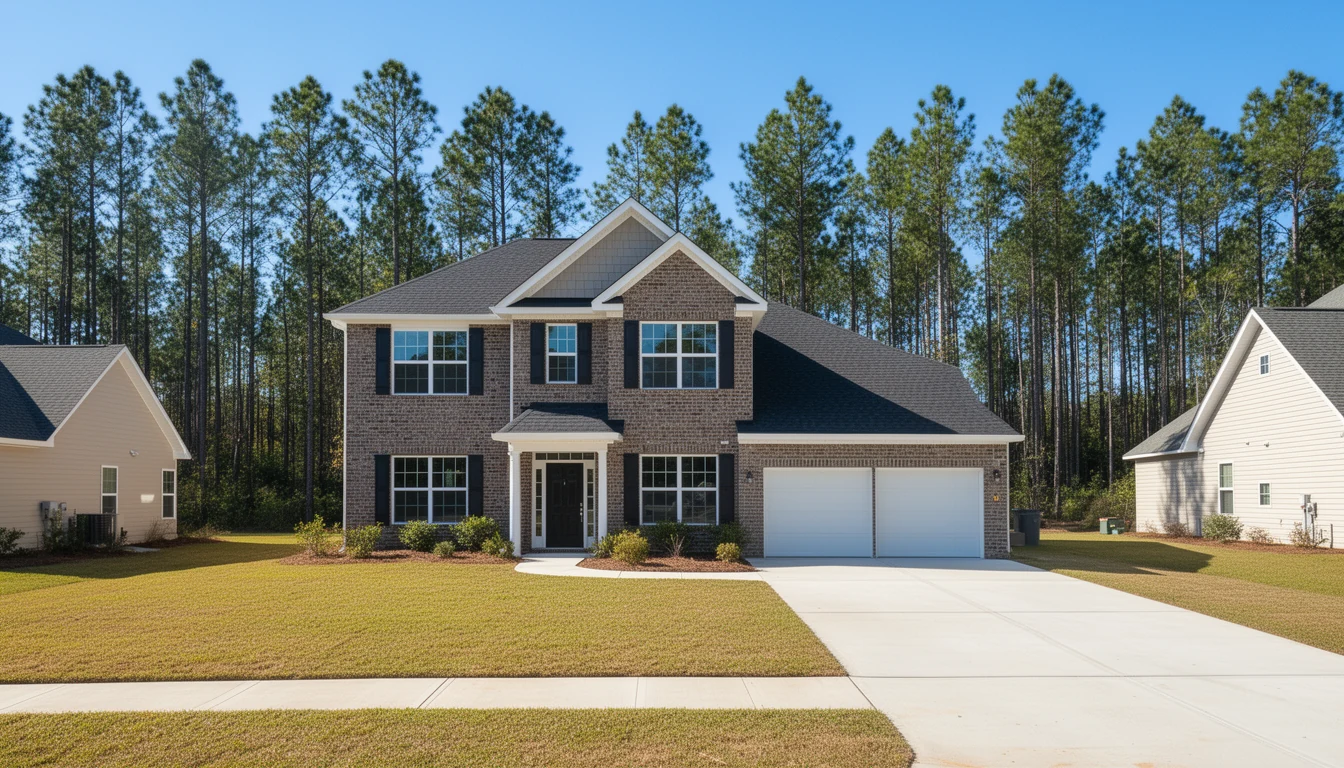
7 Builder Contract Clauses Pitt Buyers Should Never Skip
A builder's contract isn't the standard NC resale form. Seven clauses Pitt County buyers should read closely before signing in Winterville or Greenville.

The Floyd Buyout Map: Where Pitt County Can't Build
Hurricane Floyd drove the Tar River to a record 29.72 feet at Greenville. The buyouts that followed still decide which Pitt County land can be built on.